Should your SaaS company grow through content or through the product itself? That’s the question I hear from a lot of marketing leads and founders, usually right after someone on the team said “we’re product-led, so why are we writing blog posts?”
Here’s the short answer: in search, you don’t have to pick. Content-led growth SaaS teams win attention with useful articles. Product-led teams win it with a product people can try. The companies that do best in organic search connect the two, so a reader can go from a Google result to using the product in a few clicks.
In this guide I’ll explain both models in plain words, show where they meet in SEO, and give you a simple way to decide what should lead for your company. Let’s dig in.
Content-led growth is a way of growing a SaaS company where useful content is the main way new people find you. Articles, guides, reports and videos answer the questions your buyers already search for. Trust is built before anyone talks to sales or opens the product, so the content does the early selling.
In SEO terms, a content-led company treats its blog and resource pages as the front door. Someone searches a problem, lands on an article, learns something, and remembers who taught them. Some of those readers come back later through a branded search, a newsletter or a direct visit, and that’s when the signup happens.
Content-led growth works especially well when:
The weak spot is the gap between reading and doing. A great article that never mentions what your product does is a nice favor to the internet, but it won’t move your signup numbers.
Product-led growth is a way of growing a SaaS company where the product itself is the main way people find, try and buy it. A free plan, a free trial or a free tool lets people experience the value first. Sales and marketing support that experience instead of replacing it.
In SEO terms, a product-led company tries to put the product, or a small piece of it, directly in the search results. Think of a free checker, a calculator, a template gallery or a page for every integration. The searcher doesn’t read about the solution. They use it.
Product-led growth works especially well when:
The weak spot is reach. A product page can only rank for searches where someone already knows what kind of tool they want. Everyone earlier in the journey, the people who are still figuring out their problem, never sees it.
The two models answer the same question (how does a stranger become a user?) in different ways. This table sums up how they differ when you look at them through an SEO lens.
| Content-led growth | Product-led growth | |
|---|---|---|
| Main SEO asset | Articles, guides, reports | Free tools, templates, integration pages |
| Searches it wins | Problems and questions | Tasks and tool searches |
| First experience | Reading and learning | Trying the product |
| Speed to signup | Slower, builds trust first | Faster, value comes first |
| Main risk | Traffic that never converts | Too little reach early in the journey |
| Who must be involved | Marketing and subject experts | Product and engineering teams too |
Notice the last row. Product-led SEO needs time from the people who build the product. That is often the real reason a company stays content-led: not strategy, just who has time.
Neither is better on its own. For SaaS SEO, the strongest approach is content that leads straight into the product: articles that solve a problem with your product, plus free tools, templates or integration pages that let people try it. Content brings the reach, the product brings the conversion, and each makes the other work harder.
I’ve worked as an SEO consultant since 2012, and the pattern I keep seeing is the same. Companies that only publish general articles get traffic and wonder why signups stay flat. Companies that only optimize product pages convert well but stay small in search, because they only show up for people who already know what they want.
Ahrefs is a useful public example of the middle path. In its SaaS SEO guide, Ahrefs says product-led content marketing is its main marketing tactic. The same guide says the Ahrefs blog drives almost 600K organic visits every month. That’s a content engine, but one built around the product rather than next to it.
Product-led content is the bridge between the two models. Ahrefs defines product-led content as creating content that helps the reader solve their problems with your product. Semrush describes it as content that solves a real problem, teaches something valuable, and naturally includes your product as part of the solution.

The key word in both descriptions is “naturally.” Product-led content is not an advert dressed up as a blog post. It’s a genuinely useful guide where the product shows up at the moment the reader needs it. For example, a guide on finding broken links can show the steps by hand, then show how a tool does the same job in one click.
Not every keyword deserves a product mention. In its 2022 guide, Ahrefs explains that it prioritizes topics that score a 2 or 3 for business potential, so that mentions of its product are natural. You can use the same idea with a simple scale for each keyword on your list:
Start with the 3s and 2s. Write the 1s only when they support a wider topic cluster you’re building. Skip the 0s, however tempting the search volume looks. If you need a refresher on finding these keywords in the first place, my guide to keyword research for SEO covers the basics.
The most product-led part of SEO is putting a piece of the product straight into the search results. Three types of assets show up again and again.
A free tool is a small, limited version of what your product does, published as a page that can rank. In its SaaS SEO guide, Ahrefs says it has released 14 free SEO tools plus a handful of free AI writing tools, and that their landing pages combined generate over 1.2M organic traffic per month.
The reason this works goes beyond traffic. In a 2021 article, Ahrefs writes that with free tools, users get a taster of how the product works while the brand stays top of mind. The same article points out that a free tool can often be a limited version of a feature you already have. You don’t need to build something new.
Programmatic SEO means creating many similar pages from a template and a database, one for each variation of a search. For SaaS companies, integrations are the classic case. Ahrefs estimates that Zapier’s hub of integration pages brings an estimated 263k visits each month, tapping into branded search demand of over 6.7k apps Zapier integrates with.
Zapier is a good reminder of what the combined approach can grow into. Semrush reports that as of May 2025, Zapier drives over 2.6 million organic visits per month.
A word of warning from experience: programmatic pages only work when every page is genuinely useful on its own. A thousand thin pages with a swapped name in the title won’t help anyone, and search engines notice.
Templates sit right between content and product. They answer a search (“project roadmap template”), and using them means using your product. Ahrefs estimates that Notion’s template directory drives an estimated 355K organic visits each month.
If your product has anything people can copy, duplicate or start from, a template library is worth a serious look.
The simplest way to combine both models is to let each one lead at a different stage of the buyer journey. Semrush’s SaaS content guide maps it like this: top of funnel is blog posts, industry reports, podcasts and thought leadership; mid-funnel is product workflows, product education and case studies; bottom of funnel is feature breakdowns, templates and tool comparisons.
Here’s how I’d read that through a content-led versus product-led lens:
The mistake I see most often is a funnel with a strong top and nothing below it. Lots of articles, no path to the product. If that’s you, my guide to building a SaaS SEO strategy that drives signups walks through how to fix the structure.
You don’t need a big strategy workshop for this. Answer these five questions honestly:
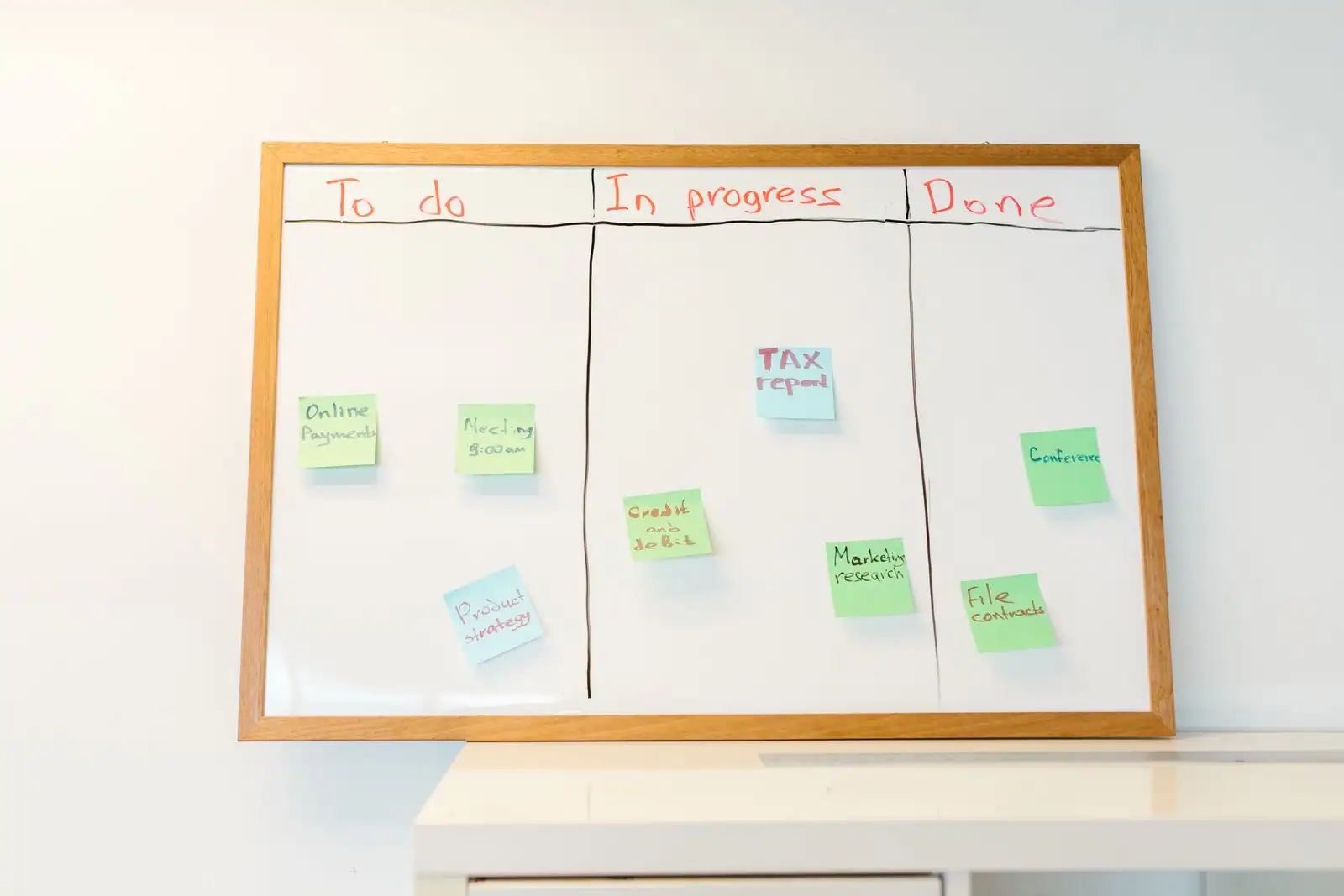
Say you run a scheduling tool for small clinics. Setup takes a day, so a quick trial doesn’t show much. Clinic owners search for problems like “reduce no-shows” long before they search for software. That points to content-led at the top.
But your product also sends reminder messages, and people search for reminder message examples. A free gallery of reminder templates, each one usable inside the product, is a natural product-led asset. So the plan becomes: educational articles about no-shows and scheduling, product-led guides showing the workflow, and a template gallery at the bottom of the funnel. Both models, each doing what it’s good at.
Measure both by what happens after the visit, not by traffic alone. For content-led pages, track how many readers move to a product page, a free tool or a signup. For product-led pages, track signups, activation and use of the free tool. Rankings and traffic are early signals, not results.

In practice that means a few things:
Even teams with a clear plan fall into a few traps. These are the ones I’d watch for.
If you’re content-led today, don’t throw it away. Score your existing articles for business potential, add natural product moments to the best 2s and 3s, and plan one small free tool or template gallery. If you’re product-led, add educational content above your product pages so you reach people earlier in their journey.
Either way, the goal is the same: a clear path from a search result to someone using your product.
Want help building this for your company? Get in touch with me.
A note on how I write: I use AI tools as part of my writing process, for example to help with research, drafting, and checking spelling, grammar and punctuation. English is my second language, and although I’m fluent and even married to an American, I still make mistakes in my writing. So, every article is written by me, then checked by Claude, and then reviewed by me, before it’s published, and every statistic links to its source.